The decision detox
Why expert curation is the new luxury – and what exhausted customers are actually asking for
We’ve arrived at a strange moment. The internet promised us infinite options and delivered agonising overwhelm instead. Choice used to be a luxury. Now, we just want someone to choose for us (or at least give us fewer, clearer options so we can make decisions we feel good about).
Across every sector we work in – travel, health, coastal and outdoor – the pattern is the same.
The antidote to choice paralysis: why brands are editing their offering
Earlier this year, decision-free travel was identified as a defining behaviour of 2026. People want to take a break from the overwhelm and find someone they trust to make the call for them.
The Hilton 2026 Trends Report supports this, noting travellers are overwhelmed by choice and finding comfort in reliability. In 2026, hotels that deliver a consistent experience will stand out, easing decision fatigue and enhancing peace of mind. People want the friction removed. They want to feel like they’re in the hands of someone (an actual human!) who knows what’s best – and who knows them well enough to get it right.
What’s more, while wealthy individuals are increasingly comfortable using AI to handle the logistics of bookings, they remain desperate for a bespoke service. The Deloitte 2025 Luxury Travel Outlook highlights that the human touch at the concierge and problem-solving level is irreplaceable. Machines can process a transaction, but they can’t provide the reassurance that a human expert can.
This isn’t just happening in travel.
Growth in luxury is slowing because aspirational consumers are being pulled in too many directions. This is why so many luxury brands have started offering what research firm McKinsey calls ’curated experiences’ that feel like a money-can’t-buy privilege. There has been a psychological shift in why people buy high-end luxury goods, and status is no longer a priority. Instead, consumers are refining their choices, favouring craftsmanship, heritage and creativity over fleeting trends.
“Our digital life exposes us to an endless stream of information: the consumer is overwhelmed and brands are having to work harder to stand out. Consequently, the words trust and curation are now crucial.” – Jenna Barnet, CEO of the Sunshine agency
Which is why the brands cutting through are the ones that simplify the journey. Let’s explore how to be one of them.
How to be the (human) expert that simplifies life
As we established in the first of our three-part Trust Paradox blog series, the process that people have to go through to figure out what’s real and what’s not, who to trust and who is trying to manipulate you into spending your money, is exhausting. Being on high alert and in uber-sceptical mode all the time isn’t much fun. And while modern tech and AI have made our lives easier, it’s also made it easier for everyone else, too, as Sari Azout, the founder of Sublime, a knowledge management tool designed to spark creativity, wrote in a recent Substack.
“The hard parts are still stubbornly human: deciding what is worth doing, inspiring people to care, the last mile of building high craft products, the slow work of building a community. The people-y things.” - Sari Azout
That’s where the magic lies: focus on the harder, ‘people-y’ things that you do, so you become an essential and helpful feature in your customers’ lives. Be the guide, the creator, the community.
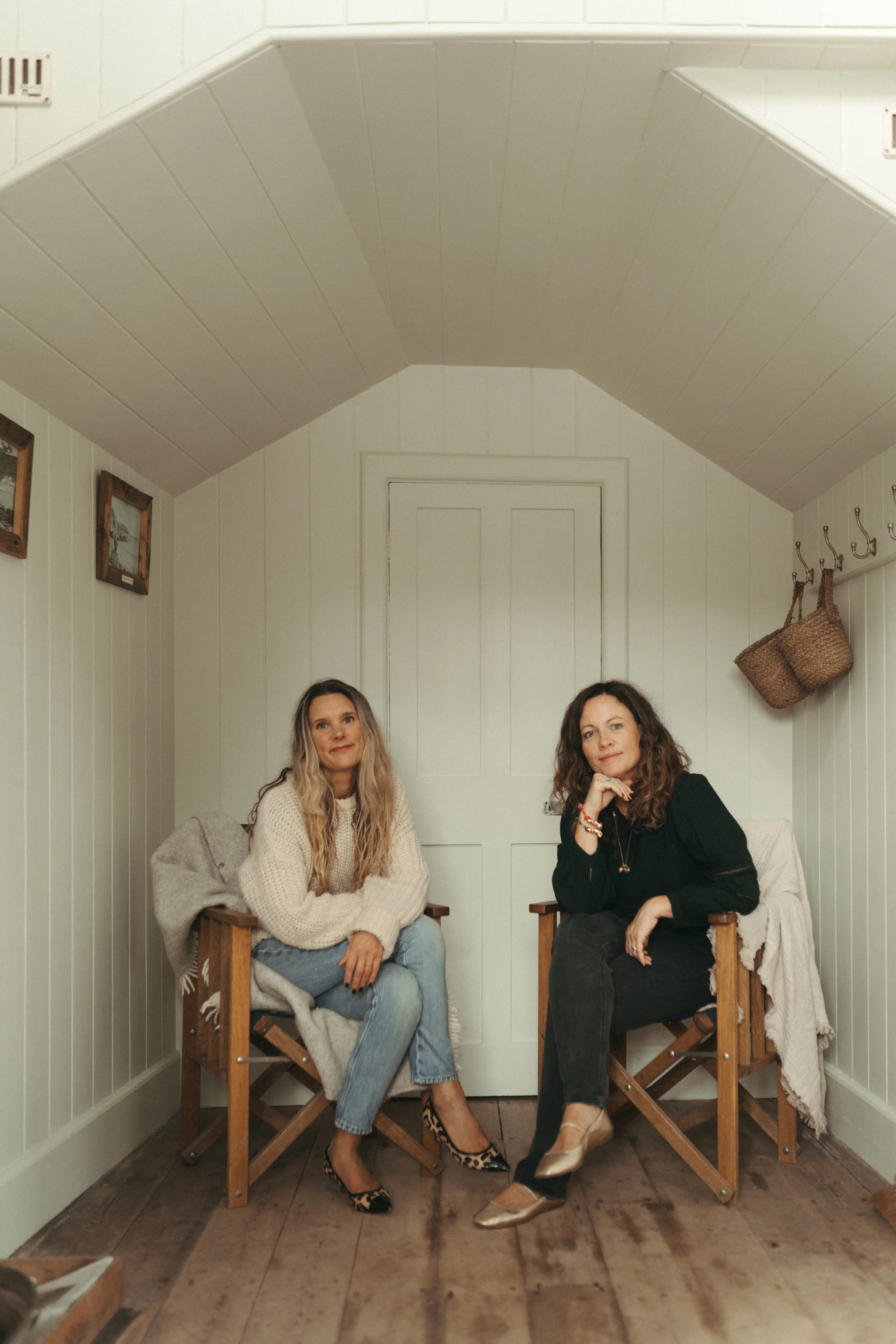
The internet promised infinite choice but delivered agonising overwhelm instead. We’re Felicity Haythorn (left) and Manfreda Cavazza, co-founders of strategic storytelling agency Salt & Sage Storytelling, and we help brands move past customer choice paralysis through editorial brand storytelling. Our copywriting and content services turn your business into a trusted curator, helping your customers simplify their lives.
Our editorial approach in practice
This is where our background as journalists comes in. We don’t just churn out copy and content. We curate. We take a clear position, eliminate alternatives and make the reader feel they’ve found something specifically for them.
Our work for Huvafen, Baros and Milaidhoo: choosing a point of view
The tone of voice and content strategy work we delivered for Versa Hospitality – the family-owned group behind some of the most remarkable luxury resorts in the Maldives and Seychelles, including Huvafen Fushi, Baros and Labriz – is a case in point. The brand was struggling to differentiate its resorts from all the other idyllic island destinations in the Maldives with identical overwater villas, white sand and turquoise seas. And if it wasn’t able to explain the difference, then potential guests would have no reason to choose them over anyone else.
Because the obvious approach to luxury resort copy is to describe the product: the panoramic views, the world-class spa, the culinary journey. It’s the same copy you’ll find on roughly 80% of luxury travel websites, and it tells the reader almost nothing that helps them choose.
The editorial approach – the one we developed with Versa – starts from a completely different question: who is this place for, and what do they actually need from it? The answer, for these resorts, turned out to be people who wanted to slow down, to fully experience the island, not just pose for Insta shots. Versa people are curious about the region’s heritage, the marine life, the local food traditions and how being there will help them wind down and be more present.
These themes describe a point of view. It removes the decision burden entirely for the readers who share it, because they immediately know this is their place.
Hedsor House: setting a new standard
This need for curation is particularly true in the high-end wedding industry. Today’s couples demand so much more than just a beautiful dress and champagne; they want deeply personal experiences that reflect their unique identities and values, all while drawing inspiration from curated social media feeds.
Hedsor House, an exquisite Georgian country house nestled within 100 acres of pristine Buckinghamshire parkland, partnered with us to develop beautifully written editorial content. The aim was to tap into this evolving trend for meaningful and personalised special events, going beyond merely highlighting the venue’s exceptional features and positioning Hedsor House as a thought leader, setting a new standard for luxury weddings.
Rock the Heirloom: curating a home
We see the same desire for guidance in the world of interiors. Our client Rock the Heirloom curates vintage antiques for people who are overwhelmed by the sheer volume of mass-produced furniture.
Instead of just listing items for sale, our content provides insights, colour advice and inspiration. It helps customers make their homes bolder using sustainable, pre-loved pieces. By acting as a filter for the ‘too muchness’ of the modern world, the brand becomes a trusted shortcut for the conscious consumer.
Wellbeing and outdoor sector: guiding with authority
In health and wellness, consumers are navigating a market so saturated with supplements, protocols, practitioners and conflicting advice that many have simply given up trying to choose wisely. The brands winning here are the ones that use the knowledge and experience to calmly guide their customers through the process: here is what you actually need, here is why, and here is how to use it.
Wild Nutrition does this well. So does Being Well Pharmacy, whose content we help shape – every blog post is built around topics and questions real patients have asked. As does Lighthouse Skincare – another of our wellness clients, whose curated selection of products is entirely recommended by dermatologists, with evidence-based articles that offer trustworthy skincare advice for specific concerns. Or Grimoire NYC, a skincare brand for people who live fast and party hard, who knew exactly how to serve its very niche audience – we contributed punchy, playful web copy to help them do just that. In a crowded marketplace full of greenwashed promises and AI-generated blah, people are desperate for connection. They want realness. They want to know the story behind the serum. The ethos behind the eucalyptus. The reason your brand exists beyond “scaling”. That’s where editorial-quality content comes in – our blog, What we’ve learned about content marketing for health and beauty brands, goes into all the details.
In the coastal and outdoor sector, the same pattern holds. Customers researching a paddleboard or wetsuit want someone who has been out on the water to tell them which one to buy. Our client Red Paddle built an entire brand on this kind of earned authority: the voice of people who actually live the sport, not a product catalogue dressed up as content.
The common thread? Human experience. We have done the thinking so you don’t have to.
The content implications
For lifestyle and travel brands, creating content that curates (and converts) involves knowing your audience. Not just demographically but psychographically – who they are, but what they believe, what they’re tired of, what they’re actually looking for underneath the stated preference for a five-star hotel, a clean supplement or a robust paddleboard that won’t let them down on the water.
It also requires resisting the temptation to hedge. Every time a brand adds a qualifier – ‘suitable for a range of occasions’; ‘perfect for all kinds of travellers’; ‘ideal for all fitness levels – it dilutes the curation and puts the decision burden back on the reader.
The brands winning on trust right now are the ones that have found the confidence to say: this is who we are. This is who this is for. If that's you, you’re going to love it. If it’s not, that’s fine too.
In the final part of this series, we tackle the question that follows naturally from this one. If expert curation is the answer, how do you prove that a human – not a machine – is behind it? And why is that proof becoming one of the most valuable assets your brand can build?
Read it here » Proof of personhood: why human content wins in an AI world
FAQs: decision fatigue
-
It’s the mental burnout customers feel when faced with too many near-identical options. In a ‘decision detox’ era, consumers are actively retreating from the overwhelm and looking for brands that simplify their life by offering fewer, better choices.
-
Because time and mental energy are the ultimate commodities. Modern luxury is having a trusted expert filter out the shite and present the perfect solution. Curation is the ultimate act of premium service.
-
Instead of just listing features, we lead with a specific point of view. By being clear about who your brand is for (and who it isn’t), editorial copy acts as a shortcut for the reader. It removes the burden of choice and makes saying yes effortless.
-
AI can process data and handle logistics, but it lacks earned authority. In sectors like travel, wellness and the outdoors, customers want the ‘people-y’ things: real-world experience, human empathy and the reassurance that a person with integrity is standing behind the recommendation.
-
Appealing to everyone is the quickest route to being trusted by nobody. A Marmite approach uses values-led storytelling to build an immediate, deep bond with your specific tribe. It turns your brand into a destination rather than just another option in an endless scroll.
-
We trade marketing-speak for journalistic rigour. We look at the psychographics of your audience (what they believe and what they value) to create content that feels like a helpful guide rather than a sales pitch. It’s about building an ecosystem of trust through authentic storytelling.